

Need new Business Software? Read this first!

Guest article by K.N. Kukoyi, founder of Purposeful Products.
The Gartner Group, the world's leading information technology company, has reported a growing trend; businesses without formal or mature IT departments are increasingly making software purchasing decisions without technical advice.
I have worked in the IT industry since 2004, and sat on my first software selection panel in 2006.In this post I’ll be sharing some tips from one of my software survival guides: Don't Buy Software For Your Small Business Until You Read This Book,written to assist small businesses with the issues they face when buying software. I hope this article will help youavoid wasting time and money on unsuitable, or inferior products.
The sinful six: common complaints with new software.
Six of the most commonplace issues and complaints that I come across are that software:
1. Ticks the right boxes “on paper,” but in practice is difficult, or time-consuming to understand, and operate.
In this scenario, once businesses start to use their new software, they quickly notice problems with it.
The menu options are in weird places, the processes are illogical, it takes 8 steps to do what could be possible in 3…
Companies often get caught out because they don’t dig into the detail of how a product does what it does. The savvy software purchaser asks not just what the product can do, they find out how it does it.
Get hands-on with the product, and give it a thorough road test using some realistic work scenarios, and always take advantage of product demonstrations, and the opportunity to “try before you buy” to get a feel of how easy a product is to use.
2. Is missing important features.
Usually in this case, features which are important are forgotten, and there is a failure to anticipate how requirements for software may change in the future.
Taking on new staff, expansion in customer numbers, and changes in legislation, processes or policies can all mean that software that was once adequate is no longer a good fit for your business.
As a result, the selection and purchasing process must either be repeated. If not, companies are left to find ways to compensate for gaps using workarounds.
Make sure you cover all the bases. Keep a checklist of requirements you can use as a benchmark, and speak with, or survey everyone who will be using, supporting, or benefitting from new software, and consult with your legal, finance, security and compliance teams if you have access to these resources.
3. Is unreliable.
After committing to a product, you may come to find that the software runs at a snail’s pace, or is unreliable; crashing at theworst moments, “timing out” leaving you checking your watch or going to make tea whilst it loads, losing work, and generally inspiring computer rage!
To avoid these pitfalls, make use of free trials, and pay attention to how long it takes to perform commonplace activities.
4. Does not support businesses in meeting legal, or regulatory requirements.
Even worse than suffering an inconvenience, this complaint can leave businesses open to fines, or even legal action.
No matter where you’re based, there is likely to be local business legislation in place, including Data Protection Acts, Disability Acts, and Privacy laws to comply with, as well as the new General Data Protection Regulation (GDPR) coming in May 2018 which will affect you if you have any customers in the European Economic Area.
Standards such as the Health Insurance Portability and Accountability Act (HIPAA), and the Payment Card Industry Data Security Standard (PCI DSS) may also be relevant to your business.
Online privacy, and data management are going to be hot topics for many years to come.
Make sure the software you use helps you to operate within the law, and not outside of it. Check the specifics of key regulations relevant to your business and industry, and get full responses along with examples of how software companies have interpreted legislation and built, or configured their systems to comply with it.
5. Is incompatible with other software systems.
Your email marketing system comes from here, your CRM system comes from there…
You use Google Apps, or Outlook for your business email, which also contains a separate list of your contacts.
Enterprise systems generally service a number of different business functions all-in-one, (including finance, sales, and CRM tools, for example) but these can be complex, and expensive.
Small businesses tend to use lots of niche tools to run their operations, but even if the individual tools are satisfactory, often these do not“play nicely” with each other.
Check the integrations offered by the companies that sell the products that you’re interested in. Fortunately, software automation tools such as Zapier, IFTTT, Automate.io, Piesync and Microsoft Flow can also be used to connect an increasingly wide range of products.
Ask vendors which products they integrate with, and go to pages like Zapier’s where you can type in the name of a product and get a list of the integrations on offer.
A few whizzy (but reliable) integrations can make all the difference - a true gift for busy business owners.
6. More expensive to run than first anticipated.
“Ah. We didn’t factor those costs in when we chose the product…”
Unanticipated costs related to software purchases can be a real set back financially.
Keep a note of the monthly, quarterly and annual expenses, add-ons, upgrades, fees for services rendered, or other products or services you’ll need to get started, or to extract value from each product that you’re considering. Use this data to make like-for-like cost comparisons for at least the first 12 months, and to help you to assess Total Cost of Ownership (TCO.)
Often companies don’t spend enough time thinking about what will happen when they hit the next, more expensive (and sometimes unaffordable) price tier.
Will you take the financial hit and accept rising product costs, or start hunting for a replacement tool (and repeat the selection and set up processes all over again)?
Look at the costs and usage caps at the price tiersabovethe one that you need right now. Choosing a product with a price-friendly model that your business can grow with will spare you from the upheaval of migrating to new products due to rising costs.
Before concluding this post, let’s cover a few other tips to assist you with your due diligence:
Use comparison and review sites to gather information about the best products available.
Capterra, offers business software reviews and infographics to help you find the right tool(s) for your business. G2crowd,allows users to draw comparisons between different software and service providers, whilst AlternativeTo is great for discovering alternatives to products you’re already familiar with.
Consider customer support beforeyou actually need it!
I like to ping an email to any businesses that I’m thinking of working with.
It’s surprising how many never respond, aren’t particularly helpful, or send you into an endless vortex of automated emails, where it is virtually impossible to reach a human, or get answers to specific questions!
Will this level of service be acceptable in an emergency?
The answer to this question should depend on what you use the product for, so consider that the quality and speed of customer care you receive should be better (and snappier) with products that you rely on heavily.
Be sure to check the “small print”
Read the terms of business, Service Level Agreement (SLA), End User License Agreement (EULA), or other forms of software licensing agreement before you commit. Often these can be accessed from a link in the website footer of software vendors, or from the settings, or about menus in mobile apps.
Look out for clauses related to privacy. Is data shared? If so, who with? Where is data stored? Who owns the content created using the app – does it belong to you, or the vendor?
Be aware that by using software, you may already be bound by the software vendor’s terms whether you signed an agreement, or not.
Remember - the bigger the role a piece of software plays in the smooth running of your business activities, the more time you should invest in the product selection process to avoid unpleasant surprises.

It was more of a gut feeling that led us to the intersection of digitalisation, mobiles and the democratisation of payments. Paynetics felt strongly about making moving and managing money right for everyone and started building a platform that covers it all.

I’m Simon Goodman and I started out in PR, where I was introduced to the noble Choc Ice working on the Cadburys account. At the time they were looking to upgrade the humble choc ice.

In 2017, Matt launched Borrow A Boat, aka the ‘Airbnb’ of boats, making waves in the charter industry by offering a modern marketplace solution with the aim of making boating more accessible, affordable, flexible and inclusive for all.

Founded in 2021 by Alisa Patotsakaya, Immersive Fox is a text-to-video generation startup that specialises in providing businesses with AI-generated videos for sales and customer communication.

Samantha Gilchrist, co-founder and CEO of The Gilchrist Collection, shares her life as an entrepreneur.

Co-founded by Conrad Poulson in 2014, Huq has been at the forefront of utilising cutting- edge technologies and innovative mobility research methods.

Going from employee to founder was a huge leap of faith. I announced the agency just a few days after turning 26 and like most 26-year-olds, I hadn’t ever owned or run a business before.

Patchwork Health was co-founded by Dr Anas Nader and Dr Jing Ouyang with the mission to make truly flexible and sustainable working a reality for all healthcare staff, amid the current workforce crisis.

After a lifetime working as a project manager for some of the world’s largest tech companies, Jeb Buckler set up Startup Giants PLC to ensure that no good tech concepts should go to waste.

So, I encouraged Ben to officially incorporate The Handbag Clinic as its own independent luxury handbag offshoot in 2013 – all still operated through our ecommerce platform at the time.

I’m Diana Babics, founder of Nourish Awards. I began in finance (accounts and auditing) before deciding this simply wasn’t for me. I then headed off to university as a mature student, initially to study art and design and latterly interior architecture.

greenworkx is co-founded by two education sector workers, Mat llic and Richard Ng, who are passionate about the planet and believe reskilling and upskilling UK workers into green jobs is future-proofing the economy.

Blaise Hope, founder and CEO of Origin Hope, brings two decades of media experience to his groundbreaking content partnership venture.

Co-founded by Nisha Ramisetty and Sam Williams, the idea for Naksha was born in 2020 when cooking became an escape during lockdown.

Charlene Hurlock was inspired by her daughter and her best friend who independently started swapping their pre-loved clothes. Aside from being a Mum, Charlene's background is predominately in global exhibition sales and media advertising.

Five sustainable gaming companies that provide great inspiration to startups wanting to do good in the world.
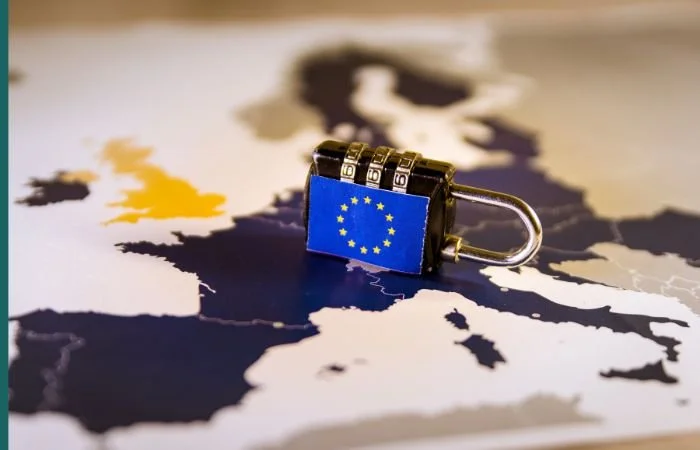
From 31 January, businesses moving goods from the European Union (EU) to Great Britain (GB) will need to comply with new UK safety and security declaration requirements.

Its simplicity has made transitioning from traditional tobacco to vaping a breeze for many.

Bitcoin, the digital currency conceived in 2009 by the mysterious Satoshi Nakamoto, is a financial phenomenon. Despite the volatility of global markets, it has demonstrated remarkable resilience.

From university students and young entrepreneurs to senior executives, imposter syndrome remains a common thread in everyone’s personal career journey.

Seeing your ideas materialise, working for yourself, leading others, and becoming a CEO might seem like a dream come true, and indeed, it is for many.

While the benefits of a well-executed PR strategy are evident to practitioners, misconceptions among business leaders often cast PR as fluff, lacking business results.

In an era marked by the cost-of-living crisis, the landscape of consumer behaviour is undergoing a significant transformation. This shift demands a strategic adaptation from businesses.

When it comes to managing spend in a business, the budgeting process can set a high level of accountability. This drives headcount forecasts, subscription-based spend, and key projects throughout the year.


Real-world usage of ChatGPT highlights a challenge that entrepreneurs and business leaders face today in understanding how to harness ChatGPT's capabilities effectively and seamlessly integrate it into business processes to yield tangible productivity.

However, 2022 was the year of the Amazon aggregation downfall. Funding dried up and inflation and rising interest rates hit the highly leveraged aggregators’ debt hard.

It goes without saying that moving away from outdated decision-making processes which rely solely on a handful of senior executives can unlock a realm of opportunity for businesses, but it is useful to begin by considering why exactly there is a need for this change.

Beyond the launch, the challenge then becomes the pursuit to be seen. This is where search engine optimisation (SEO) comes in to act as an ally for your online business. With the high street experiencing dwindling foot traffic, the allure of being a hidden gem has lost its appeal.

When the narrative is almost always the same, it can perpetuate a very particular idea of how a business should be run that has for so long excluded so many.

With the emergence of embedded finance and digital payment solutions, a lot of businesses are experiencing fundamental shifts leading them to become, to some extent, a fintech.

The difference between securing the investment and losing interest often hinges on how effective startups are at conveying their vision and value proposition, so creating a compelling pitch deck has never been more important.

Acknowledging these concerns, Dr. Yousef Alhammadi, the Executive Director of The Abu Dhabi Early Childhood Authority (ECA), sheds light on a groundbreaking approach that empowers parents to safeguard their children’s digital experiences.

Every business has taken on the responsibility to speed up the process of collecting customer payments without compromising security. It is another way to stay competitive in a business environment with decreasing margins and substantial competition.

Edge computing has emerged as one of the most important trends in IT since the advent of ChatGPT and LLMs.

Are you equipped to embrace the future of tax administration? With the UK's Making Tax Digital (MTD) initiative, traditional tax practices are poised for a digital makeover.

Recent instances of Microsoft, TikTok, and Meta facing GDPR fines due to inadequate protection of young people's data underscore the insufficiency of efforts by Big Tech to safeguard the next generation of consumers.

Now, there are opportunities to access accounting software that simplifies the process. This is especially crucial since tax regulations have gone digital, requiring all financial reports, including tax returns, to be submitted online.

Within this exciting landscape, the concept of "smart EVs #1" has emerged, encompassing a range of cutting-edge electric models that combine intelligence, sustainability, and style.

A happy and healthy workforce will bring more productivity, engagement, and loyalty. However, it’s important employer’s realise a ‘1 size fits all’ approach to wellbeing just won’t cut it.

In particular, AI’s potential impact on email marketing cannot be overstated. For businesses, it has the potential to streamline activity, increase engagement, and ultimately drive conversions.

From the humble kitchen table offices to the dynamic innovation hubs scattered across the UK, venture capitalists and angel investors have wholeheartedly recognised the nation's immense potential in spearheading advancements in the tech sector.
You are an early-stage founder, eager to generate buzz and excitement around your business. You live and breathe your startup, but how do you catch the media's attention and inspire them to write about it?

Circular economy is another way of thinking about an economic system that far better matches both the fact that man exists as part of an ecosystem, not separated from it, and how we best create and deliver valuable solutions.

A sales strategy is a plan of action that outlines the approach and tactics a business will use to achieve its sales goals and sell to prospective clients. It details the steps that a company will take to identify, engage, and convert leads.
Five sustainable gaming companies that provide great inspiration to startups wanting to do good in the world.
From 31 January, businesses moving goods from the European Union (EU) to Great Britain (GB) will need to comply with new UK safety and security declaration requirements.
Its simplicity has made transitioning from traditional tobacco to vaping a breeze for many.
Bitcoin, the digital currency conceived in 2009 by the mysterious Satoshi Nakamoto, is a financial phenomenon. Despite the volatility of global markets, it has demonstrated remarkable resilience.
From university students and young entrepreneurs to senior executives, imposter syndrome remains a common thread in everyone’s personal career journey.
Seeing your ideas materialise, working for yourself, leading others, and becoming a CEO might seem like a dream come true, and indeed, it is for many.
While the benefits of a well-executed PR strategy are evident to practitioners, misconceptions among business leaders often cast PR as fluff, lacking business results.
In an era marked by the cost-of-living crisis, the landscape of consumer behaviour is undergoing a significant transformation. This shift demands a strategic adaptation from businesses.
When it comes to managing spend in a business, the budgeting process can set a high level of accountability. This drives headcount forecasts, subscription-based spend, and key projects throughout the year.
Real-world usage of ChatGPT highlights a challenge that entrepreneurs and business leaders face today in understanding how to harness ChatGPT's capabilities effectively and seamlessly integrate it into business processes to yield tangible productivity.
However, 2022 was the year of the Amazon aggregation downfall. Funding dried up and inflation and rising interest rates hit the highly leveraged aggregators’ debt hard.
It goes without saying that moving away from outdated decision-making processes which rely solely on a handful of senior executives can unlock a realm of opportunity for businesses, but it is useful to begin by considering why exactly there is a need for this change.
Beyond the launch, the challenge then becomes the pursuit to be seen. This is where search engine optimisation (SEO) comes in to act as an ally for your online business. With the high street experiencing dwindling foot traffic, the allure of being a hidden gem has lost its appeal.
When the narrative is almost always the same, it can perpetuate a very particular idea of how a business should be run that has for so long excluded so many.
With the emergence of embedded finance and digital payment solutions, a lot of businesses are experiencing fundamental shifts leading them to become, to some extent, a fintech.
The difference between securing the investment and losing interest often hinges on how effective startups are at conveying their vision and value proposition, so creating a compelling pitch deck has never been more important.
Acknowledging these concerns, Dr. Yousef Alhammadi, the Executive Director of The Abu Dhabi Early Childhood Authority (ECA), sheds light on a groundbreaking approach that empowers parents to safeguard their children’s digital experiences.
Every business has taken on the responsibility to speed up the process of collecting customer payments without compromising security. It is another way to stay competitive in a business environment with decreasing margins and substantial competition.
Edge computing has emerged as one of the most important trends in IT since the advent of ChatGPT and LLMs.
Are you equipped to embrace the future of tax administration? With the UK's Making Tax Digital (MTD) initiative, traditional tax practices are poised for a digital makeover.
Recent instances of Microsoft, TikTok, and Meta facing GDPR fines due to inadequate protection of young people's data underscore the insufficiency of efforts by Big Tech to safeguard the next generation of consumers.
Now, there are opportunities to access accounting software that simplifies the process. This is especially crucial since tax regulations have gone digital, requiring all financial reports, including tax returns, to be submitted online.
Within this exciting landscape, the concept of "smart EVs #1" has emerged, encompassing a range of cutting-edge electric models that combine intelligence, sustainability, and style.
A happy and healthy workforce will bring more productivity, engagement, and loyalty. However, it’s important employer’s realise a ‘1 size fits all’ approach to wellbeing just won’t cut it.
In particular, AI’s potential impact on email marketing cannot be overstated. For businesses, it has the potential to streamline activity, increase engagement, and ultimately drive conversions.
From the humble kitchen table offices to the dynamic innovation hubs scattered across the UK, venture capitalists and angel investors have wholeheartedly recognised the nation's immense potential in spearheading advancements in the tech sector.
You are an early-stage founder, eager to generate buzz and excitement around your business. You live and breathe your startup, but how do you catch the media's attention and inspire them to write about it?
Circular economy is another way of thinking about an economic system that far better matches both the fact that man exists as part of an ecosystem, not separated from it, and how we best create and deliver valuable solutions.
A sales strategy is a plan of action that outlines the approach and tactics a business will use to achieve its sales goals and sell to prospective clients. It details the steps that a company will take to identify, engage, and convert leads.

Emilie Vallauri is a 27-year-old program manager at Techstars with a passion for innovation. Born and raised in Nice, France, Emilie studied business and political sciences before embarking on a career punctuated by innovation and supporting startups.

Zsuzsa has been instrumental in growing Antavo from a startup to a scaleup. As Chief Strategy Officer and co-founder, she is transforming the company into a unique loyalty technology vendor, offering a next-gen, best-in-class solution to the loyalty sector.

Software engineering and product development is my specialisation - and I have had a wide range of experience across the industry. I had a brilliant 22-year long career at IBM, working across a number of roles, which I really loved.

Holly Zoccolan is an entrepreneur and Founder of new parenting app, Carol. Before Founding Carol and entering the tech space, Holly built successful online wellness brand The Health Zoc in 2016.

Anna Gudmundson is the CEO and co-founder of Sensate, a device that emits infrasonic waves that are synchronised to resonate with the specially composed hemispheric audio in the app.

Rebecca is Senior Vice President of Clients, Partnership and Creative Transformation at CreativeX, provider of an industry-first AI driven data platform to help the world’s most loved brands including PepsiCo, Nestle and Facebook achieve creative excellence.


Bitcoin, the digital currency conceived in 2009 by the mysterious Satoshi Nakamoto, is a financial phenomenon. Despite the volatility of global markets, it has demonstrated remarkable resilience.