

Collaborating with the competition to cope with COVID-19: How Businesses are surviving the pandemic

Businesses around the world have had to collaborate with competitors in order to survive the coronavirus pandemic - in some cases they have grown – but sharing excessive amounts of information with rivals comes with risks.
A new paper published in the journal Industrial Marketing Management has examined coopetition – cooperating with competitors – a strategy used to cope with the unique impact of COVID-19 on retailers, pharmaceutical companies, non-profit organisations and tech firms, such as Google and Amazon.
Dr James M. Crick, of Loughborough University, and his father Professor David Crick, of the University of Ottawa, have highlighted the implications of a more open marketplace between rivals – due to relaxed competition laws – and have made recommendations for business leaders to think about.
In the paper, Coopetition and COVID-19: Collaborative business-to-business marketing strategies in a pandemic crisis, they suggest that companies which choose to share resources such as information, data, expertise and other capabilities can yield higher levels of performance, meet unprecedented demand and operate efficient supply chains.
Coopetition can also help with simply surviving within a volatile market.
However, as well as the commercial benefits of coopetition, the paper also warns of the risks of collusion, both during the COVID outbreak and post-pandemic.
Industry bosses should be aware of the extent to which they are allowed to engage in cooperative partnerships with rivals, the authors say.
While laws in many countries have been relaxed to allow businesses to survive the pandemic, there are still regulations in force that can penalise firms for illegal collusive practices, such as forming monopolies and price-fixing.
Prof Crick and Dr Crick also say there will always be an element of competitiveness at play – even if it is only very small – during any coopetition strategy.
Businesses should not solely depend on their coopetition partners to survive.
Dr Crick, of the Loughborough School of Business and Economics, said: “Owner-managers are encouraged to acknowledge that once this global pandemic is over, and the regulation of certain forms of coopetition are potentially enforced, it might be challenging to end their partnerships with rivals.

“Therefore, they should agree on the extent to which they will cooperate, vis-à-vis, compete with their rivals in advance of changing circumstances.”
Finally, the paper indicates that businesses have to be aware that coopetition is a risky business-to-business marketing strategy and there could be negative outcomes, such as tension, lost intellectual property and diluted competitive advantages.
Dr Crick said: “To minimise the dark-sides of coopetition from occurring, it is recommended that owner-managers and functional-level employees should be vigilant for situations that involve coopetition partners behaving opportunistically.
“This will indicate when it is time to exit from these relationships.”
Prof Crick added: “Collectively, these managerial implications serve as actionable considerations for practitioners when implementing coopetition strategies during times of crisis, such as the COVID-19 outbreak.
“For clarity, coopetition has the potential to be a rewarding – performance-enhancing – business-to-business marketing strategy, but there are risks associated with companies working with untrustworthy competitors.
“Following these guidelines, if managed correctly, coopetition activities can be advantageous throughout a global emergency.”
Both academics said that more research needs to be carried out in order to fully understand the impact of coopetition during a global pandemic.
The paper lists a number of suggestions for future research, which include investigating the circumstances which led companies to cooperate, what were the experiences as these companies had and what were the outcomes.


It was more of a gut feeling that led us to the intersection of digitalisation, mobiles and the democratisation of payments. Paynetics felt strongly about making moving and managing money right for everyone and started building a platform that covers it all.

I’m Simon Goodman and I started out in PR, where I was introduced to the noble Choc Ice working on the Cadburys account. At the time they were looking to upgrade the humble choc ice.

In 2017, Matt launched Borrow A Boat, aka the ‘Airbnb’ of boats, making waves in the charter industry by offering a modern marketplace solution with the aim of making boating more accessible, affordable, flexible and inclusive for all.

Founded in 2021 by Alisa Patotsakaya, Immersive Fox is a text-to-video generation startup that specialises in providing businesses with AI-generated videos for sales and customer communication.

Samantha Gilchrist, co-founder and CEO of The Gilchrist Collection, shares her life as an entrepreneur.

Co-founded by Conrad Poulson in 2014, Huq has been at the forefront of utilising cutting- edge technologies and innovative mobility research methods.

Going from employee to founder was a huge leap of faith. I announced the agency just a few days after turning 26 and like most 26-year-olds, I hadn’t ever owned or run a business before.

Patchwork Health was co-founded by Dr Anas Nader and Dr Jing Ouyang with the mission to make truly flexible and sustainable working a reality for all healthcare staff, amid the current workforce crisis.

After a lifetime working as a project manager for some of the world’s largest tech companies, Jeb Buckler set up Startup Giants PLC to ensure that no good tech concepts should go to waste.

So, I encouraged Ben to officially incorporate The Handbag Clinic as its own independent luxury handbag offshoot in 2013 – all still operated through our ecommerce platform at the time.

I’m Diana Babics, founder of Nourish Awards. I began in finance (accounts and auditing) before deciding this simply wasn’t for me. I then headed off to university as a mature student, initially to study art and design and latterly interior architecture.

greenworkx is co-founded by two education sector workers, Mat llic and Richard Ng, who are passionate about the planet and believe reskilling and upskilling UK workers into green jobs is future-proofing the economy.

Blaise Hope, founder and CEO of Origin Hope, brings two decades of media experience to his groundbreaking content partnership venture.

Co-founded by Nisha Ramisetty and Sam Williams, the idea for Naksha was born in 2020 when cooking became an escape during lockdown.

Charlene Hurlock was inspired by her daughter and her best friend who independently started swapping their pre-loved clothes. Aside from being a Mum, Charlene's background is predominately in global exhibition sales and media advertising.

In North America, Iced Teas (Coldbrew) is a bustling £2bn marketplace. Yet, in the UK, despite being the second fastest-growing soft drink sub-category (after cold brew coffee), there is still a lack of appreciation for brands like Kaytea.

I’m Melissa Gauge, founder of SpareMyTime. I left my corporate role in 2016 to set up a City-based business with a couple of partners and another business by myself, an online platform.

Founded in 2006 by Amelia Peckham and Clare Braddel, Cool Crutches & Walking Sticks aims to empower those who need support to walk.

I’m Gerry Lianos - the co-founder of Raffolux, an online raffling platform that gives people the chance to win amazing prizes for a low cost and support charities close to their hearts.
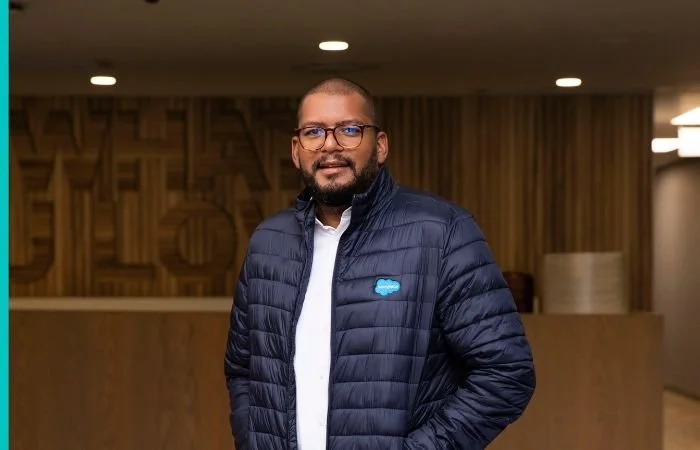
Jason Tim is the CEO and co-founder of CloudSmiths and has been CEO for the past two years. Prior to this, he held previous roles at the company such as Managing Director and Sales Director.

My name is Lucy Bramley and I'm the founder of Ruched & Ready, one of the UK's leading size inclusive fashion labels helping women embrace their curves and feel confident.

KBF Enterprises was established in 2008 by Managing Director, Kieran Fisher and is the business behind two of the most recognised sports nutrition brands in the UK – Bodybuilding Warehouse® and Warrior®.

Matt Cater is co-founder of Clix Technologies, an innovative new company that offers the UK’s only mobile-first, fully customisable, Web App-based smart lockers.

Ben Maruthappu is a London-based doctor and CEO of Cera, a multi-award winning digital-first home healthcare company, which has grown 100-fold in the past three years, now delivering over 50,000 patient appointments a day.

The Natural Love Company was founded by friends and wedding photographers Ben Foster and Barney Walters. The Cornwall-based business was launched as a result of their previous careers being put on halt by the pandemic.

As the CEO of Botify, Adrien has had both a global and notable career, co-founding Botify back in 2012 and thereafter relocating to the United States from France. Adrien is passionate about shifting the organic search marketing landscape.

Sançar has spent years leading marketing teams at high-profile startups, including Typeform and Hotjar. Early in his career, he struggled to set work-life boundaries and lacked a clear understanding of his personal wellbeing needs and values.

Co-founded by Mike Robertson and Adrian Brown, AbbeyCross is the world’s first B2B trading and compliance marketplace, focused on improving underlying market infrastructure for Emerging Market (“EM”) currencies.

My name is Derk Roodhuyzen de Vries and I am the CEO and co-founder of Fixico. Alongside my business partner Mark van Laar, we created Fixico back in 2014 to revolutionise the car repair industry.

Linkup was founded by the two Manchester-based entrepreneurs, Jack Peagam and Ben Whatson, as they aim to step away from ‘traditional' career paths and combine their shared passion for creativity with business.

Emilie Vallauri is a 27-year-old program manager at Techstars with a passion for innovation. Born and raised in Nice, France, Emilie studied business and political sciences before embarking on a career punctuated by innovation and supporting startups.

Zsuzsa has been instrumental in growing Antavo from a startup to a scaleup. As Chief Strategy Officer and co-founder, she is transforming the company into a unique loyalty technology vendor, offering a next-gen, best-in-class solution to the loyalty sector.

Software engineering and product development is my specialisation - and I have had a wide range of experience across the industry. I had a brilliant 22-year long career at IBM, working across a number of roles, which I really loved.

Holly Zoccolan is an entrepreneur and Founder of new parenting app, Carol. Before Founding Carol and entering the tech space, Holly built successful online wellness brand The Health Zoc in 2016.

Anna Gudmundson is the CEO and co-founder of Sensate, a device that emits infrasonic waves that are synchronised to resonate with the specially composed hemispheric audio in the app.

Rebecca is Senior Vice President of Clients, Partnership and Creative Transformation at CreativeX, provider of an industry-first AI driven data platform to help the world’s most loved brands including PepsiCo, Nestle and Facebook achieve creative excellence.



Bitcoin, the digital currency conceived in 2009 by the mysterious Satoshi Nakamoto, is a financial phenomenon. Despite the volatility of global markets, it has demonstrated remarkable resilience.