
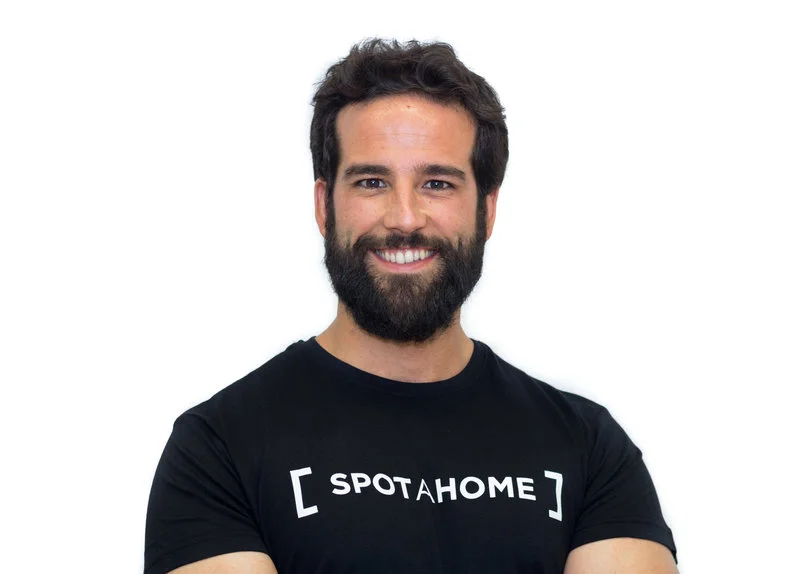
Meet the co-founder of SpotaHome

Hi Alejandro, thank you so much for joining me. To kick things off, tell me a little bit about the founder of Spotahome
I am co-founder and CEO of Spotahome.com, an online booking platform for mid to long term accommodation.
Before setting up Spotahome, I spent three years in China, where I learnt Chinese and gained a unique understand of the culture by setting up two businesses. I have also had the opportunity to live and work in London in the real estate industry, and I am now based in my home country of Spain.
My goal is to make the world smaller by simplifying the challenges people face when operating in different regions. I believe there is still a lot to do in order to make it easier for everyone to be able to work, study and therefore live anywhere in the world. Spotahome is contributing to this process by making it easier for people to find accommodation abroad.
Inspiration is always a great indication of why people launch businesses. Who or what inspired you to get started?
I've always imagined a world without barriers, where international mobility is easy. With this philosophy in the back of my mind, the inspiration for Spotahome emerged from a combination of experiences.
During my time in China, I launched two startup businesses - an export business and a travel agency. During my stay there, I found that a number of factors including the language barrier, and not really understanding how the rental market worked, meant that it was extremely difficult to find accommodation.
Later, I returned to Europe and worked both in London and Lisbon in the real estate sector. It was during this time that the idea for Spotahome blossomed. The realisation of how much time, effort, and money went into each step of the rental process lead to the idea that if people could book holiday accommodation online without the need to physically visit the property, then they should be able to do the same for longer mid-to-long term bookings. From here Spotahome was born.
How do you set yourself apart from other businesses in your industry?
The number one thing that sets us apart from other businesses in the property market is that Spotahome’s rental process is 100% online, saving both landlords and tenants time, effort and money.
Tenants can search for and book accommodation without having to schedule in viewings, which can be extremely time intensive, inconvenient and costly, especially if you have to travel to and from a number of different viewings.
Our independent Homecheckers visit every property to take extensive photos, 360s and videos of the property, we then create floor plans and a detailed property description. This means that landlords are provided with a listing for their property at no cost and with no effort required. Potential tenants are also presented with an unbiased representation of their future home.
Most importantly we have a number of systems in place that ensure that the platform is scam free for all users, including releasing funds to the landlord 48 hours after the move-in date to ensure that the tenant doesn’t have any issues with the property once they move in, and guaranteeing against rental defaults and damages for landlords.
What’s the single most important decision that you made, that contributed to your business?
One of the most important decisions that contributed to the business was the foresight to see that the rental industry was in desperate need of change.
It is an industry that hasn’t changed much despite the pervasive effect of the internet. The holiday industry has changed drastically because of sites such as Booking.com and Expedia. I realized that people were accustomed to renting a property for a weekend or even a week based on only a few pictures. What about all those who need a place to live for several months or years?
Being able to see that gap in the market and being willing to change the status quo is the main decision that contributed to the birth and continued growth of Spotahome.
How did you fund the launch of your business and what creative strategies did you use to execute a minimal cash flow?
We started out with just €3,000 - all four founders invested our savings in the business. We kept our expenses low and spent whatever we had on photographers to build our listings for our customers. All four of the founders were – and still are – very hands-on in the business and we personally did a lot of the early running around ourselves to get the business off the ground.
We enlisted the help of people we knew and trusted, many of who are still in the business today. Once we kicked off and friends and family realised the potential of the business, we raised €125,000 amongst them before we secured our initial rounds of venture capital investment.

How did you conquer those moments of doubt that so often affect entrepreneurs or stop many with great ideas – what pushes you through?
It can be difficult to conquer those moments of doubt, however, our mission is beyond ourselves and gives us the motivation and strength to move forward. Our mission is to reinvent the real estate market making it transparent, instant and exciting.
Apart from the above, our customers also motivate all of us. Seeing the change in their behaviour that comes from improving their lives and giving them time to spend on the things they love instead of on activities they hate is the biggest motivation of all.
Also, our team is a constant driver to improve and keep pushing forward. Furthermore, we have a fantastic set of investors that have given us invaluable direction in our business. Passion Capital and Seaya Ventures have been on-board from the early days and have given us invaluable input into the business. Also, a number of our other investors, which include Howzat Partners (early investors in Trivago), Arthur Kosten, the co-founder of Booking.com, Klaus Nyengaard, ex CEO Just Eat, etc. have been able to give us really specific advice, which has been invaluable.
Being able to tap into an incredible group of people with an extensive knowledge base definitely helps me to overcome any challenges and self-doubt that I might have faced in the past.
Who is your target audience?
We don’t really have a set target audience, Spotahome is used by people of all ages and from all walks of life – from students through to professionals from any country in the World.
We are popular with international and Erasmus students and expats that are relocating to different countries, as the technology allows them to search for, and secure accommodation without even being in the country, but in saying that we find that over 14% of our London bookings come from within the UK and we have taken bookings from all ages groups, including people in their 60s and 70s.
What would be your number one tip for young entrepreneurs who are ready to launch their own business?
My number one tip is to find your mission, your “why”. Without this it is really hard to fight for a purpose every single day. That purpose drives you and will ignite your passion. That strong belief in your purpose will help you build great products for your customers and constantly improve the services provided to them. Furthermore, your conviction in your mission will encourage you to surround yourself with people equally as passionate, and that will help you work towards accomplishing your vision.
Once you have your team in place, it is essential to remain humble. Absorb the knowledge and experience of the people around you. Especially your investors, as they typically have years of experience in their sector and can provide you with invaluable advice. So, ask a lot and listen.
Also, I'd tell them they have to be prepared to work hard and put everything into their project - it takes perseverance, confidence, optimism and determination to make it happen, and you quickly prioritise what's important to give it your all. A lot of late nights and weekends, but it’s worth it in the end.
If you could have one person record your voicemail, who would it be and why?
In business, Jeff Bezos - he is an outstanding entrepreneur. I admire his values, his ‘customer-first’ approach to business, and the humility he shows.
What first in the mornings, phone, book, laptop or me time?
Me time! I really enjoy Crossfit, so I make time every morning to exercise. It’s essential to take care of both your mind and body, so I ensure that I prioritise time to take care of both. Being active in the morning sets you on the right path for the day, and it gets the heart rate going which helps to keep you focused.
What plans do you have for Spotahome over the coming 12 months?
Right now, it's about increasing our scalability in operations. The Homechecker is key to the value proposition of our business, since we personally check the properties, and this requires us to have a network of top people to make it happen.
We opened three new cities in Italy over the past two months, bringing our total to 20 cities across Europe, Turkey and UAE, and in the future, we will keep pushing this momentum. To achieve this goal, we're going to need the right people on board, such as engineers and product developers, and hiring these people is the second part of the challenge for the coming months.
What’s the most important question entrepreneurs should be asking themselves?
They should ask themselves if they are clear on their vision. It’s key to have a clear vision in business, and to have a final objective in mind. This allows you to focus on and challenge yourself to meet those objectives. When you climb a mountain, you’re focused on the peak, you have one single-minded objective, and this is what drives you and forces you to put all your effort into achieving that.
How do you believe the evolution of tech will affect your industry over the next 10 years?
The property sector affects all of us, in one way or another. In cities where people are time poor, looking for accommodation can be a major inconvenience and so it is imperative that the rental industry embraces digital. I believe that technology will drastically affect the rental industry.
We predict that businesses will further digitise the rental process, which will simplify transactions, and lead to greater flexibility and above all transparency and speed. Ultimately, establishing a digital platform will enable property management to be a less time consuming and more streamlined processes.
Recharging every so often is important. How do you recharge when you’re feeling burnt out?
Time out to clear your mind and think is important. I like to go somewhere remote and enjoy getting back to nature, which is also incredibly inspiring for me. I visited Norway last year and explored the Fjords at a time when not many tourists visit. One night I stayed in very small town where, because it was out of season, the hostel owner had to open up the property just for me.
He was from Argelia and had been living in Norway for years, and we talked for a long time about how he felt he had made an impact on the local community, many of whom had never even travelled (he lived in Canada, USA, Mexico, UK and France before). In turn, he knew that he’d been changed too by living there and learning from them. That for me is what is so amazing about living in different countries, the time that you spend in a new community shapes both the community and yourself making all of us more knowledgeable about and respectful with each other. It demonstrates that we are all the same and have the same basic rights, as no person should have more rights than another to share or live in this world.

In this episode Nadine Sandcroft spoke to Anthony Odogwu, founder of Future Space Technologies. He talks being an entrepreneur in the age of millennials, preparing for the future of technology, Generation Z, and what young entrepreneurs should really be asking themselves before they go into business.
What habits do you think helped you to become successful?
Being optimistic is key. Optimism allows you to take risks. One of my values, and indeed the company values, is to be decisive. You get better results by making a good decision today than a perfect one tomorrow. So, combining optimism and decisiveness allows business leaders to try out things constantly without fear. Plus, the optimism helps you have perseverance.
The other key habit is not to waste time – there’s only so many hours in a day, make sure you use them well. For example, I have a rule that meetings can’t be longer than 30 minutes. If you need more time than this, you aren’t being efficient. Of course, there are always some exceptions, but if the person inviting you respects your time and is organised, the meeting should just be about finalising the decisions.
What are your thoughts on networking to build your business?
It’s without a doubt essential. Through networking I met the other founders, and together we share ideas and give advice. In the early days it was fundamental to building the business, both in identifying the right people to join us, through to making contact with the right people who lead us to our investors, service providers and mentors along the way.
You have to try to be in as many places as possible and meet as many people as possible; only by opening doors you’ll find more paths that may lead to help you accomplish your mission.
How did you build such an amazing consumer culture around Spotahome?
We built our amazing customer culture by always putting the customer first. Our first core value is “We live for our customer”. Every single decision is driven by the question: “is this going to help our customers?” As a result, on several occasions they have told us that we have gone above and beyond their expectations. We are here for them and because of them. They are our heart. And to build this within the company you have to lead by example, you have to have strict rules within the team to maintain or increase customer satisfaction.
From its very conception, Spotahome has been about providing a service that benefits all of its users – tenants and landlords equally. It is clear to see from our fantastic reviews on Trustpilot that we have the right formula. Now that we have introduced guarantees for both tenants and landlords, we are taking this one-step further by removing the risks associated with renting – again, that has come from listening to our customers and understanding their concerns and needs.
What would be your top marketing tip, to grow a business that is so niche, yet incredibly timeless?
The best marketing tip is to provide the best possible customer experience ever. A “wow” experience. Listen and learn from your customers and develop the product with them in mind. Always go the extra mile with our customers. Have customers love your product, there is no better marketing strategy. If you do this right, hopefully your customers will share your passion.
What are your thoughts on failure as an entrepreneur?
I founded two startups when I lived in China, one of them being a luxury travel agency for Chinese. It worked well at first, but eventually the contacts in China cut out the middle-man and dealt directly with the agencies in Europe. That’s another learning to take – make sure you’re creating value at every step of the process. But essentially, not every idea will be a success. It’s all a learning process – your idea might not work out the first time, but take from that what you can and move on.
Then I set up another business which was an international job site that showed job hunters suitable employment opportunities around world, tailored to their skills. A global database of needs from companies and skills of people that had no borders and allowed people to go work anywhere in the world. We didn’t raise capital but learnt a lot. This one actually led to Spotahome, as it shares purpose of eliminating barriers in the world and increase human mobility.
But every single experience is needed, it shapes you if you listen to the learnings and use them in your next ventures. You try, fail, learn and try again with more learnings.

It was more of a gut feeling that led us to the intersection of digitalisation, mobiles and the democratisation of payments. Paynetics felt strongly about making moving and managing money right for everyone and started building a platform that covers it all.

I’m Simon Goodman and I started out in PR, where I was introduced to the noble Choc Ice working on the Cadburys account. At the time they were looking to upgrade the humble choc ice.

In 2017, Matt launched Borrow A Boat, aka the ‘Airbnb’ of boats, making waves in the charter industry by offering a modern marketplace solution with the aim of making boating more accessible, affordable, flexible and inclusive for all.

Founded in 2021 by Alisa Patotsakaya, Immersive Fox is a text-to-video generation startup that specialises in providing businesses with AI-generated videos for sales and customer communication.

Samantha Gilchrist, co-founder and CEO of The Gilchrist Collection, shares her life as an entrepreneur.

Co-founded by Conrad Poulson in 2014, Huq has been at the forefront of utilising cutting- edge technologies and innovative mobility research methods.

Going from employee to founder was a huge leap of faith. I announced the agency just a few days after turning 26 and like most 26-year-olds, I hadn’t ever owned or run a business before.

Patchwork Health was co-founded by Dr Anas Nader and Dr Jing Ouyang with the mission to make truly flexible and sustainable working a reality for all healthcare staff, amid the current workforce crisis.

After a lifetime working as a project manager for some of the world’s largest tech companies, Jeb Buckler set up Startup Giants PLC to ensure that no good tech concepts should go to waste.

So, I encouraged Ben to officially incorporate The Handbag Clinic as its own independent luxury handbag offshoot in 2013 – all still operated through our ecommerce platform at the time.

I’m Diana Babics, founder of Nourish Awards. I began in finance (accounts and auditing) before deciding this simply wasn’t for me. I then headed off to university as a mature student, initially to study art and design and latterly interior architecture.

greenworkx is co-founded by two education sector workers, Mat llic and Richard Ng, who are passionate about the planet and believe reskilling and upskilling UK workers into green jobs is future-proofing the economy.

Blaise Hope, founder and CEO of Origin Hope, brings two decades of media experience to his groundbreaking content partnership venture.

Co-founded by Nisha Ramisetty and Sam Williams, the idea for Naksha was born in 2020 when cooking became an escape during lockdown.

Charlene Hurlock was inspired by her daughter and her best friend who independently started swapping their pre-loved clothes. Aside from being a Mum, Charlene's background is predominately in global exhibition sales and media advertising.

In North America, Iced Teas (Coldbrew) is a bustling £2bn marketplace. Yet, in the UK, despite being the second fastest-growing soft drink sub-category (after cold brew coffee), there is still a lack of appreciation for brands like Kaytea.

I’m Melissa Gauge, founder of SpareMyTime. I left my corporate role in 2016 to set up a City-based business with a couple of partners and another business by myself, an online platform.

Founded in 2006 by Amelia Peckham and Clare Braddel, Cool Crutches & Walking Sticks aims to empower those who need support to walk.

I’m Gerry Lianos - the co-founder of Raffolux, an online raffling platform that gives people the chance to win amazing prizes for a low cost and support charities close to their hearts.
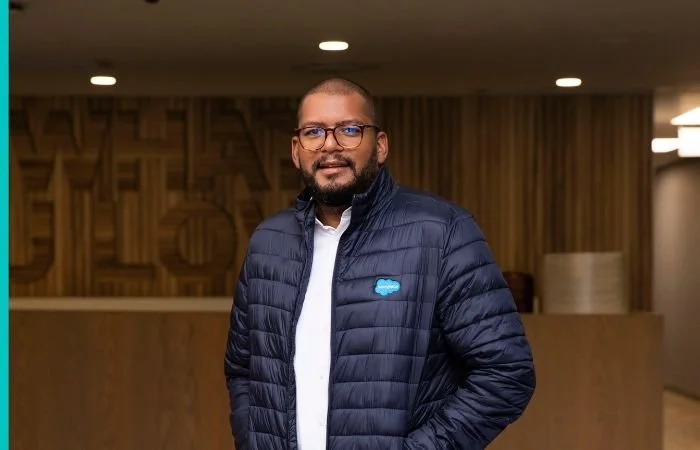
Jason Tim is the CEO and co-founder of CloudSmiths and has been CEO for the past two years. Prior to this, he held previous roles at the company such as Managing Director and Sales Director.

My name is Lucy Bramley and I'm the founder of Ruched & Ready, one of the UK's leading size inclusive fashion labels helping women embrace their curves and feel confident.

KBF Enterprises was established in 2008 by Managing Director, Kieran Fisher and is the business behind two of the most recognised sports nutrition brands in the UK – Bodybuilding Warehouse® and Warrior®.

Matt Cater is co-founder of Clix Technologies, an innovative new company that offers the UK’s only mobile-first, fully customisable, Web App-based smart lockers.


Emilie Vallauri is a 27-year-old program manager at Techstars with a passion for innovation. Born and raised in Nice, France, Emilie studied business and political sciences before embarking on a career punctuated by innovation and supporting startups.

Zsuzsa has been instrumental in growing Antavo from a startup to a scaleup. As Chief Strategy Officer and co-founder, she is transforming the company into a unique loyalty technology vendor, offering a next-gen, best-in-class solution to the loyalty sector.

Software engineering and product development is my specialisation - and I have had a wide range of experience across the industry. I had a brilliant 22-year long career at IBM, working across a number of roles, which I really loved.

Holly Zoccolan is an entrepreneur and Founder of new parenting app, Carol. Before Founding Carol and entering the tech space, Holly built successful online wellness brand The Health Zoc in 2016.

Anna Gudmundson is the CEO and co-founder of Sensate, a device that emits infrasonic waves that are synchronised to resonate with the specially composed hemispheric audio in the app.

Rebecca is Senior Vice President of Clients, Partnership and Creative Transformation at CreativeX, provider of an industry-first AI driven data platform to help the world’s most loved brands including PepsiCo, Nestle and Facebook achieve creative excellence.


Five sustainable gaming companies that provide great inspiration to startups wanting to do good in the world.

From 31 January, businesses moving goods from the European Union (EU) to Great Britain (GB) will need to comply with new UK safety and security declaration requirements.

Its simplicity has made transitioning from traditional tobacco to vaping a breeze for many.

Bitcoin, the digital currency conceived in 2009 by the mysterious Satoshi Nakamoto, is a financial phenomenon. Despite the volatility of global markets, it has demonstrated remarkable resilience.

From university students and young entrepreneurs to senior executives, imposter syndrome remains a common thread in everyone’s personal career journey.

Seeing your ideas materialise, working for yourself, leading others, and becoming a CEO might seem like a dream come true, and indeed, it is for many.

While the benefits of a well-executed PR strategy are evident to practitioners, misconceptions among business leaders often cast PR as fluff, lacking business results.

In an era marked by the cost-of-living crisis, the landscape of consumer behaviour is undergoing a significant transformation. This shift demands a strategic adaptation from businesses.

When it comes to managing spend in a business, the budgeting process can set a high level of accountability. This drives headcount forecasts, subscription-based spend, and key projects throughout the year.


Real-world usage of ChatGPT highlights a challenge that entrepreneurs and business leaders face today in understanding how to harness ChatGPT's capabilities effectively and seamlessly integrate it into business processes to yield tangible productivity.

However, 2022 was the year of the Amazon aggregation downfall. Funding dried up and inflation and rising interest rates hit the highly leveraged aggregators’ debt hard.

It goes without saying that moving away from outdated decision-making processes which rely solely on a handful of senior executives can unlock a realm of opportunity for businesses, but it is useful to begin by considering why exactly there is a need for this change.

Beyond the launch, the challenge then becomes the pursuit to be seen. This is where search engine optimisation (SEO) comes in to act as an ally for your online business. With the high street experiencing dwindling foot traffic, the allure of being a hidden gem has lost its appeal.

When the narrative is almost always the same, it can perpetuate a very particular idea of how a business should be run that has for so long excluded so many.

With the emergence of embedded finance and digital payment solutions, a lot of businesses are experiencing fundamental shifts leading them to become, to some extent, a fintech.
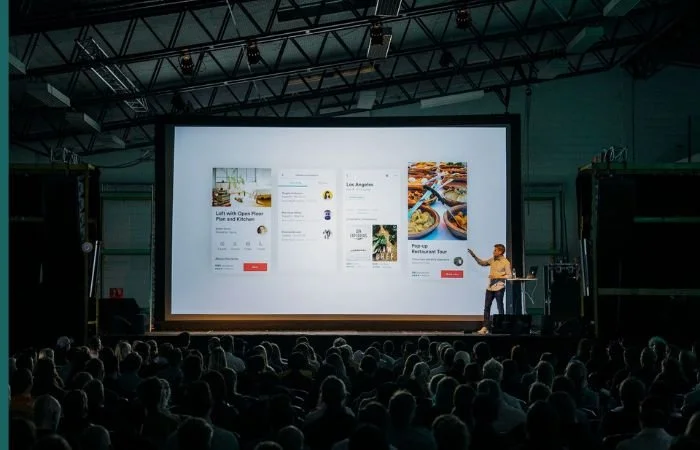
The difference between securing the investment and losing interest often hinges on how effective startups are at conveying their vision and value proposition, so creating a compelling pitch deck has never been more important.

Acknowledging these concerns, Dr. Yousef Alhammadi, the Executive Director of The Abu Dhabi Early Childhood Authority (ECA), sheds light on a groundbreaking approach that empowers parents to safeguard their children’s digital experiences.

Every business has taken on the responsibility to speed up the process of collecting customer payments without compromising security. It is another way to stay competitive in a business environment with decreasing margins and substantial competition.

Edge computing has emerged as one of the most important trends in IT since the advent of ChatGPT and LLMs.

Are you equipped to embrace the future of tax administration? With the UK's Making Tax Digital (MTD) initiative, traditional tax practices are poised for a digital makeover.

Recent instances of Microsoft, TikTok, and Meta facing GDPR fines due to inadequate protection of young people's data underscore the insufficiency of efforts by Big Tech to safeguard the next generation of consumers.

Now, there are opportunities to access accounting software that simplifies the process. This is especially crucial since tax regulations have gone digital, requiring all financial reports, including tax returns, to be submitted online.

Within this exciting landscape, the concept of "smart EVs #1" has emerged, encompassing a range of cutting-edge electric models that combine intelligence, sustainability, and style.

A happy and healthy workforce will bring more productivity, engagement, and loyalty. However, it’s important employer’s realise a ‘1 size fits all’ approach to wellbeing just won’t cut it.

In particular, AI’s potential impact on email marketing cannot be overstated. For businesses, it has the potential to streamline activity, increase engagement, and ultimately drive conversions.

From the humble kitchen table offices to the dynamic innovation hubs scattered across the UK, venture capitalists and angel investors have wholeheartedly recognised the nation's immense potential in spearheading advancements in the tech sector.

You are an early-stage founder, eager to generate buzz and excitement around your business. You live and breathe your startup, but how do you catch the media's attention and inspire them to write about it?

Circular economy is another way of thinking about an economic system that far better matches both the fact that man exists as part of an ecosystem, not separated from it, and how we best create and deliver valuable solutions.

A sales strategy is a plan of action that outlines the approach and tactics a business will use to achieve its sales goals and sell to prospective clients. It details the steps that a company will take to identify, engage, and convert leads.

Early-stage entrepreneurs across the UK with a clear social or environmental mission are invited to apply for EASI26 – the Entrepreneurs' Award in Social Innovation – before the 31st March 2026 deadline.

University of Edinburgh spin-out BIOCAPTIVA has raised £1.58 million in a new funding round and launched its first product in the US.

The appointment represents a key step in AppsFlyer’s continued evolution as the Modern Marketing Cloud, helping brands unify measurement, data collaboration, and activation across increasingly complex digital ecosystems.

However, the findings underline a clear truth for business leaders – human connection remains a powerful driver of commercial performance, and leadership confidence.

SPORTL, a London-based pay-as-you-train fitness booking platform, has launched today across app stores after closing a £250K pre-seed funding round backed by industry experts.

With this investment, Uvionix will accelerate its product release and expand its market presence across the US and Europe.

The company's technology will have innovative applications in infant nutrition, cosmetic and dermatological, and cognitive industries.

This funding will accelerate Mulder’s mission to tackle the transparency and compliance challenges that complicate the medical device supply chain.

Tangible, a software platform for decarbonizing construction has raised $3 million in a funding round co-led by Prologis Ventures and Pi Labs. Additional investors include Foundamental, Silence VC, and RE Angels.

DBLX, led by CEO and Co-Founder Nicky Hoyland, collaborates with global enterprises to enhance their people experiences. The company’s offerings include immersive digital content, bespoke platform development, and strategic consulting services.

Apheris, the leading federated computing company powering data networks for the life sciences sector, today announced the completion of a Series A funding round, bringing total funding to date to $20.8 million.

Co-investors on deals during 2024 included Investment Fund for Scotland (managed by Maven Capital), Scottish National Investment Bank, Old College Capital, Scottish Enterprise, Par Equity, Mercia and various Scottish angel syndicates.

This funding will propel Criterion Capital's vision of redefining hospitality with its sleep-centric, design-forward hotel concept.

The theme of this year’s BBBAwards is #NEXT. Now in its 11th year, the BBBAwards is marking a new decade of celebration of the outstanding achievements of Black professionals and entrepreneurs in the UK.

Aistetic, a groundbreaking Oxford University AI spinout, has proudly announced its participation in the Techstars Future of Ecommerce Accelerator powered by eBay, a highly competitive program designed to help shape ecommerce.

An alarming new study of workplace leaders describes an environment of unconscious fear in modern-day leadership, leading to toxic culture, stunted growth, performance and productivity, and decision inertia.

Mambu, a leading Software as a Service (SaaS) cloud banking platform, today announced it is now available in AWS Marketplace, making it one of the first core banking providers on the site.

Bengalis have been rewarded and acknowledged for their substantial contribution to healthcare, finance, politics, education and the arts.

Retail PR will be working with COOK in the lead up to Christmas, helping to support their PR objectives throughout the golden quarter.

A new cohort of six GeoTech and PropTech start-ups has just been selected to start on its Accelerator Programme.

In 2020, data confirmed that there are 1,223,850 tonnes of waste disposed in the ocean, with future predictions standing at a rise of 60% by 2030, 147.4% by 2040 and 274% by 2050.

A growing social enterprise supported by a global network, Impact Hub London Euston at Regent’s Place will offer under-served local communities affordable workspace and tailored business support, as well as arranging impactful engagement activities throughout Camden.

Phil Race appointed as Chief Executive as Jim Darragh steps down after seven successful years of leadership.

Appointment of product management leader, Phillip Burr, to bring Lumai’s game-changing AI technology to market across all regions.

New data released from Tech Climbers has revealed how Greater Manchester’s tech sector continues to thrive, as companies plan to attract millions in investment.

Appointments of Joel Cardenas as the new Head of Business Development for Latin America, and Ard Crebas as the new Head of Business Development for North America and the Caribbean.

Fastest growing modern-day learning management system, Thrive Learning, has announced a number of new appointments within the team as part of their ambitious growth plans.

Ai Build, the Additive Manufacturing (AM, also known as 3D printing) software company, has raised a Series A round of $8.5 million led by IQ Capital.

The Board of Arbuthnot Banking Group PLC ("Arbuthnot", the "Company" or the "Group") provides the following update regarding the trading performance of the Group for the three months to 30 September 2023.

The partnership enables service providers worldwide to access the UK network footprint with location-based intelligence and automated and standardised quoting.



Bitcoin, the digital currency conceived in 2009 by the mysterious Satoshi Nakamoto, is a financial phenomenon. Despite the volatility of global markets, it has demonstrated remarkable resilience.